A licensed gas technician from Chimney Sweep Richmond handles the pilot, valve, burner, controls, and vent on these fireplaces. Glass, liners, trims, and media have a separate page. Here the subject is what makes the flame and where its exhaust goes.
An intermittent pilot fireplace in this collection does more than light on demand. Its valve carries a small stepper motor that sets the flame height, driven by a receiver that takes orders from a modulating remote thermostat. As the room nears its setting, the remote tells the receiver to step the flame down rather than shutting it off, which is why these units burn so evenly.
When the flame stops changing, or changes in jerks, the motor is the first suspect, and it is replaced as a kit without changing the valve body. The receiver, the remote, and the battery housing that powers them during an outage come next. A millivolt fireplace in the same family uses a simpler remote thermostat that only switches the valve on and off, so its faults point to the pilot, the thermopile, and the wiring instead. Matching the fault to the right gas train saves the cost of a valve that was never broken.
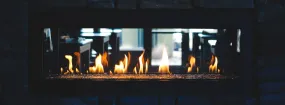
The more open a firebox is to the room, the more its venting matters, and the Marquis collection has some very open ones. An Atrium peninsula can vent through flexible or rigid direct-vent pipe or through a flush-mount power vent that pushes exhaust to a wall the natural draft could not reach. A powered system needs electricity and a proven fan before the valve opens, so it stays off during an outage.
The Capella inserts vent up an existing chimney through a pair of liners with a cap at the top. A liner pulled off its collar at the insert, or a cap damaged by ice, shows up as a lazy, yellow flame or a pilot that drops out on windy days. On every model we trace the run from collar to termination and check the cap. If you notice a sour smell, a headache, or a carbon monoxide alarm while the fire is on, turn it off, open a window, and phone us once you are out of the room.
The gas complaints on these fireplaces sort by gas train and venting, and each one points to a part.
Flame stuck high even as the room overheats - a stepper motor that no longer moves, or a remote set to manual rather than thermostat mode.
Millivolt unit lights but will not answer the remote - weak thermopile output under load, or a loose wire at the remote receiver's valve terminals.
IPI unit fails to start after a power cut - flat or corroded cells in the battery housing, which also leave the module without backup.
Pilot will not stay lit on a Capella insert - a pilot hood fouled with dust, or a downdraft from a liner cap knocked askew.
Yellow, sooty flame on a linear burner - ember glass over the ports, or an orifice still set for the other fuel after a conversion.
Smell of gas at the access panel - turn the supply valve off and leave it off; a weeping fitting is found with leak solution, never by lighting the unit.
Gas fireplace repair parts for this collection are shared with its maker's own fireplaces, and they are catalogued by fuel and, in places, by serial number. The pilot burner is a fully assembled unit in separate natural gas and propane versions, and on some models the right one depends on whether the serial falls above or below a break point. Remote thermostats come in millivolt and modulating versions, each in natural gas and propane, so four different handsets cover the range.
For that reason we ask for the plate before ordering anything. It sits in the control area behind the lower trim and lists the model, the fuel, the ignition type, and the serial. A pilot burner cleaned every autumn and a battery housing kept free of corrosion keep these gas trains working for many seasons, and both are part of every service we do.
Three details help most when you book: whether the remote raises and lowers the flame or only switches the fire, whether a pilot flame appears, and which fuel is piped to the unit. Those answers point us to the right gas train before we arrive. Chimney Sweep Richmond holds a gas licence and insurance for this work, and most gas fireplace repair calls finish in one visit once the parts are matched to the serial.
Call (778) 719-4793 to arrange a time, or contact us online with a photo of the plate. Owners across Richmond hear back with a date and the parts list for the visit.
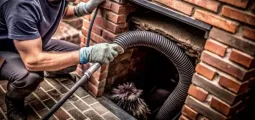
Keep your home safe and your chimney spotless in Richmond. Our professional chimney cleaning team removes buildup so your fireplace works as it should.
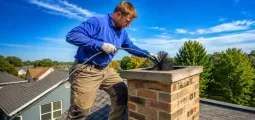
Experience the difference a thorough chimney sweep can make in Richmond. We clear soot, blockages, and hazards so your home stays warm and secure.
Comprehensive chimney sweep services are just a call away in Richmond. From creosote removal to smoke draft solutions, we’ve got your chimney covered.
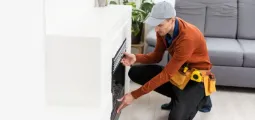
Need reliable fireplace solutions in Richmond? Our fireplace experts handle everything from inspections to complete restorations with precision.
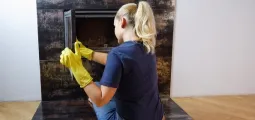
Restore the clean, cozy feel of your fireplace in Richmond. Our gas fireplace cleaning removes buildup and leaves your unit running smoothly.
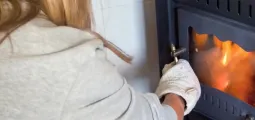
Stay warm all season long with expert gas fireplace maintenance in Richmond. We inspect and service all key components to prevent issues before they start.