The brand traces its radiant heating work back to 1890, and its fireplaces are made by Miles Industries. Every unit is heater-rated, ships with a remote, and is designed to keep working in a power failure. Chimney Sweep Richmond services the inserts, zero-clearance fireplaces, and linear models, and this page explains how they differ from fan-driven gas fireplaces.
The Legend G3 insert has been in homes for about two decades and remains one of the brand's most common units, followed by the slightly larger G3.5 and the G4. The Retrofire insert and the Portrait series, which comes as an insert or a zero-clearance fireplace with interchangeable fronts, round out the traditional range. Contemporary models include the H5 and the larger H6, the L1, L1 See-Thru, and taller LT1, and the L2, LT2, and longer L3. Many Valor units in Richmond were fitted as inserts in old masonry fireplaces, which is why the G-series and Portrait models make up so much of our service work.
Controls changed over the years too. Older units ran a standing pilot with an earlier Maxitrol-style remote and receiver, which have since been replaced by the GV60 Plus and GV60 Max systems. Fitting a GV60 Plus to an older standing-pilot unit adds a seven-day automatic pilot shutdown that the original did not have, a detail owners notice the first autumn after an upgrade. The newest units can use the Valor 10 remote and its Wi-Fi app.
These fireplaces heat mainly through radiation. Low-mass ceramic fibre logs glow quickly, and the glass is designed to absorb and pass on radiant warmth to people and surfaces in the room rather than simply warming air. Many models add a Secondary Heat Exchanger that boosts convective heat without a fan, and several offer AutoFire, a feature the maker developed for its inserts.
Because nothing depends on a blower or house current, the fire keeps heating during an outage on its batteries alone. That is a big reason owners choose the brand, and it makes the batteries in the remote and receiver the single most important wear item. We replace or test them at every visit and check the logs, which carry the radiant load and must sit exactly in their positions to glow evenly. The glass gets the same attention, because a film on its inner face cuts the radiant heat reaching the room even when the flame looks normal.
Owners of a Valor across Richmond usually describe one of the following, and each has a cause we can confirm quickly.
Fire will not start in a power cut - tired batteries in the receiver; these units need no mains power, but they do need fresh cells.
Pilot out after the summer - the seven-day shutdown on a GV60 Plus system, cleared by a relight from the remote.
Logs no longer glow evenly - ceramic logs moved out of position or embers spread over the burner ports.
Room heats more slowly - dust in the secondary heat exchanger passages, or a film on the glass reducing radiant output.
App will not connect - the Valor 10 Wi-Fi link lost after a router change, while the handset still works.
Many owners treat these fireplaces as backup heat, so the most useful time for service is early autumn, before the first storm. A visit then covers fresh batteries in the remote and receiver, a pilot and burner check, the logs and embers reset to the manual's layout, the glass cleaned, and the secondary heat exchanger passages cleared. Outdoor-rated models get their termination and burner area cleaned of summer debris, and inserts get a look at the liner cap, which often collects leaves over the warmer months.
Keep a spare set of batteries near the fireplace through winter, along with a tested CO alarm nearby, as with any gas appliance. If that alarm ever sounds, turn the fire off and let in fresh air before calling. Kept on that schedule, a radiant fireplace from this maker will carry a household through a long outage season after season.
Three details help us prepare: the model, the remote you use (GV60 Plus, GV60 Max, or Valor 10), and whether the unit is an insert or a zero-clearance fireplace. Our gas fitters are licensed and Chimney Sweep Richmond is insured for every job. The opening appointment covers batteries, ignition, burner, logs, glass, heat exchanger, and venting, and it finishes with a written note of anything we would watch. For an insert, we also look up the old chimney at the liners and cap, since a radiant insert relies on a clean, tight vent to keep its glass clear.
Phone (778) 719-4793 to set a date, or send your model through contact us. A reply from Chimney Sweep Richmond confirms the visit and lists the parts we expect to need.
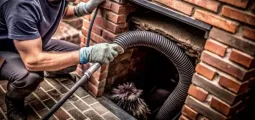
Keep your home safe and your chimney spotless in Richmond. Our professional chimney cleaning team removes buildup so your fireplace works as it should.
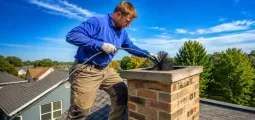
Experience the difference a thorough chimney sweep can make in Richmond. We clear soot, blockages, and hazards so your home stays warm and secure.
Comprehensive chimney sweep services are just a call away in Richmond. From creosote removal to smoke draft solutions, we’ve got your chimney covered.

Need reliable fireplace solutions in Richmond? Our fireplace experts handle everything from inspections to complete restorations with precision.
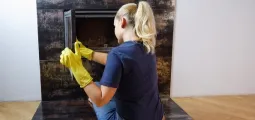
Restore the clean, cozy feel of your fireplace in Richmond. Our gas fireplace cleaning removes buildup and leaves your unit running smoothly.
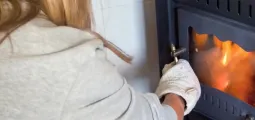
Stay warm all season long with expert gas fireplace maintenance in Richmond. We inspect and service all key components to prevent issues before they start.